Once upon a Monday…

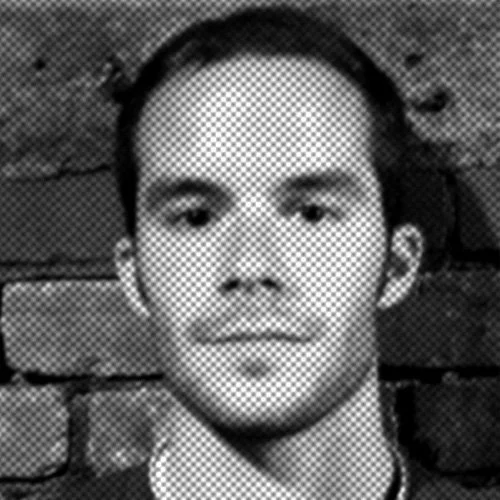
JETBOY
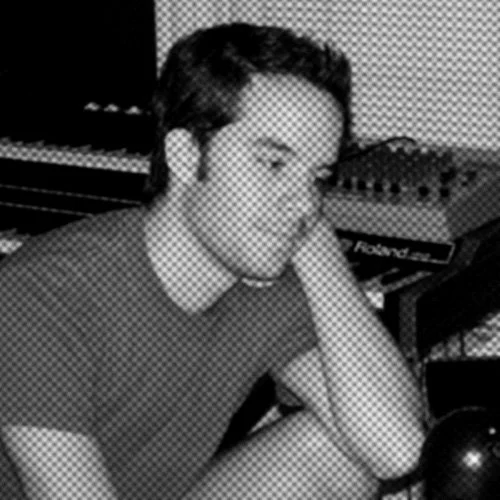
Very young, I fell in love with music of all kinds. It came first from my father, a great music lover with wide-ranging tastes: Supertramp, The Seeds, Steve Reich; then from Marie-Élisabeth, the older sister of my childhood best friend, who listened to music that felt oh so "modern" to our ears: Depeche Mode, Anne Clark, Kraftwerk; and finally from Simon, a friend I made in class the moment I spotted cassettes of The Cure on his desk. He was the one who introduced me to britpop, Saint Etienne, Cocteau Twins, and above all: Stereolab — an obsession that never left me.
At that time, CISM — the Université de Montréal’s campus radio station — had become a kind of magic portal to music I could never have found otherwise. I was 17, studying literature, and I dared to imagine my own show of... strange music. L’Étranger — a reference to the Camus novel, but above all to a song by The Cure — would be its title. I carefully prepared my demo on cassette. As I dropped off my project at the station’s front desk, I told myself: "You never know." Two weeks later: project accepted. I would broadcast from midnight to three in the morning on Thursday nights. At that hour, there were no content restrictions whatsoever: total freedom, total bliss.
It was in the hallways of CISM that I met Elsie Martin, who hosted Jetgirl — a British music show whose theme was The Damned song Jetboy, Jetgirl. We shared the same obsession with everything coming out of the United Kingdom, and very quickly we began co-hosting together. When Elsie left to become a VJ at Musique Plus, she let me take the title: Jetboy— which would later become my first pseudonym and DJ name, right through the early years of Montag.
OHNE
I would go regularly to L’Oblique for my show — a small neighbourhood record shop on the Plateau where I borrowed CD singles straight from England each week in exchange for a little on-air promotion. It was my partner at the time who spotted a notice on their bulletin board: "Looking to form a band — influences: Stereolab, Broadcast, The Breeders, Sonic Youth." The person who had pinned it there was Olivier, who became my friend the moment we met, and a few months later my first roommate and musical accomplice.
Our music project was called Ohne ("without" in German) — for the sound of the word. We composed together using my Yamaha CS-20M, a synth I had bought myself for my 20th birthday, and Olivier’s Korg Polysix — Olivier also played guitar. We could spend hours trying to recreate sounds reminiscent of Broadcast’s Work and Non Work — an album we must have listened to together a thousand times. We also had an old floppy disk sampler that let us sample obscure musique concrète records borrowed from the Phonothèque. Our music was deliberately dissonant, retro, and inevitably lo-fi for lack of means. Little did I know that our shared love for Broadcast would soon lead us all the way to them.
BROADCAST
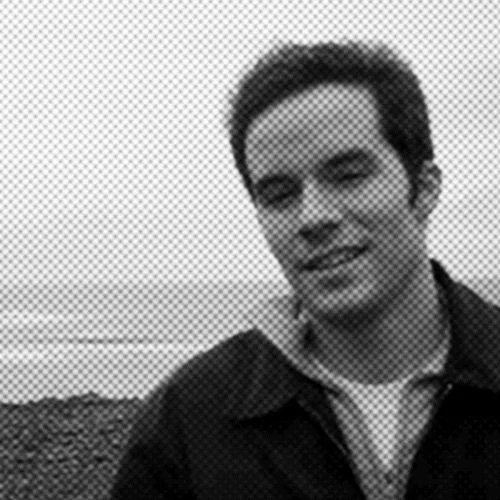
The greatest privilege of being a radio host was getting to meet musicians when they came through Montréal. When I learned that Broadcast would be playing their first North American concert to mark the 10th anniversary of Warp Records, I promised myself I would get an interview. By luck, they had the same manager as Stereolab — Martin Pike — and, to my great joy, he had agreed. Olivier came with me, of course. In the hotel lobby where Martin had arranged to meet us, we nervously waited for Trish, James, Tim and Roj. The introductions were awkward, but the interview quickly became a surprisingly natural conversation. James ended up inviting me backstage after the show. A dream.
The Broadcast concert was, for me, a moment of interstellar music. I left the Bowery Ballroom with the promo CD of The Noise Made by People in my hands — and inside the sleeve, a miraculous inscription in James’s hand that would keep me connected to my new mentors and friends: broadcast@talk21.com.
TOOG
Among the people I interviewed who left the deepest mark on me: Sarah Cracknell of Saint Etienne, Eirik Glambek Bøe of Kings of Convenience, Laetitia Sadier, Mary Hansen and Morgane Lhote of Stereolab. Then there was Gilles Weinzaepflen. Poet and musician, he composes under the name Toog. Less than a month after the Broadcast show, he was playing in Montréal with the mysterious Momus and a Japanese pop star, Kahimi Kari, at the now-defunct Jailhouse Rock Café. I had gotten hold of his first album 6633 and loved everything about it — the lyrics, at once beautiful and absurd, the synths, and that gentle voice that recited as much as it sang. I had never heard anything like it. Electronic theatre.
When I arrived at the Jailhouse, the promoters led me to the stage where Gilles was standing. He had agreed to give me an interview for my show Jetboy. I had never met a French-speaking artist who lived on "my planet" musically. His humour was delirious. Gilles made me realize that you could be a musician without taking yourself too seriously — and above all, make music without having to be in a band, even sing in French and find success in Japan. The life of the solo musician suddenly felt far more tangible. After his show, we stayed in touch. Gilles would regularly send me his poems by email, all of them beautiful, sometimes on paper too. I never imagined for a moment that we would be touring Eastern Canada together barely two years later...
THE BOOK PEOPLE
Two months after my mother’s death, Broadcast was playing at the Cabaret — their first concert in Montréal. Lost in my grief, I saw in our reunion a little light. I let them know I had started composing, "nothing serious." Trish Keenan then told me, with all the seriousness in the world: "You know, if you make music every day, something good’s going to come out of it. Eventually." The words were engraved in my mind. As she left, she told me I was welcome in England — an invitation I would take literally. One month after meeting Broadcast
backstage at the Cabaret, the name Montag came to me — Monday, in German, like Ohne before it.
But its true origin goes back to when I was fifteen, in Madame Jean’s English class, where she had the brilliant idea (without irony) of introducing us to Truffaut’s Fahrenheit 451. In Bradbury’s dystopian future, Guy Montag is one of the firemen tasked with burning books — now banned by law, considered dangerous. Montag dares to keep books in secret, and eventually crosses a river to join the Book People: a community devoted to preserving human memory, each member having learned a book by heart in order to pass it on. The final minutes of the film — those recitations in every language beneath falling snow, magnified by Bernard Herrmann’s music — gave me a powerful sense of belonging. Of being among the people who, like me, choose beauty over conformity. In my story, Trish is the one who welcomed me among the Book People. I was ready to go it alone.
THE REAL BEGINNINGS
I finished my first musical collage as Montag on
January 2nd, 2001, barely three months after my mother’s death. With everything I was going through, Ohne was on pause and I felt a very strong need to create alone. Composing brought me closer to my mother — and to myself, grief-stricken to the bone. I never gave that first track a name — Untitled — and yet it is the very piece that gave birth to Montag. Once I started, I could no longer stop composing, searching for "my sound." I drew on ideas from Ohne — sampling, the analogue synths I was compulsively buying on eBay in search of new sonic textures. I had heard about a user-friendly Swedish software called Reason from musician friends and dove into it the way you set off on a journey — gradually discovering my own way of weaving my music. The result: a hesitant music, handmade from a multitude of cut up sounds assembled obsessively. Artisanal music at its core. You can hear the microbeats aesthetic that was already everywhere in the European electronic scene. The rhythms are a combination of sounds recorded with various percussion instruments and objects, along with sounds from old drum machines. While Montag’s music was at first almost entirely electronic, I gradually started to blend in acoustic sounds: an autoharp, a multicoloured children’s xylophone, and of course the violin — my first instrument, set aside for years. It was with all of this material that I built myself sound collages as shelters to ease the pain of grief.
But I had to make a living. After a law degree at McGill — which I had immediately decided never to practise — then a communications degree at UQAM (which I hated), I briefly taught web design at CEGEP. I felt lost, discouraged at not being able to "find myself professionally". Fortunately, I had become one of the regular DJs at bar Laïka, a short walk from home. It was exhilarating, but forty dollars a week wasn’t going to take me very far. Trying to make a living from music seemed like a perfectly illusory dream — from my own music, even more so.
It was Mathilde Géromin, who then co-hosted Jetboy, Jetgirl with me at CISM, who inadvertently changed the course of my life: after hearing one of my demos, she insisted: "You absolutely have to send this to Gooom." — "To whom?" She knew the Parisian music scene inside out, and had heard in my music a certain affinity with the recent releases from a young Parisian minimalist electronic label that was already making waves in Europe.
So I mailed my demos, without much hope. A few weeks later — booom! Jean-Philippe Talaga, the driving force behind Gooom Disques, was calling: "I love your tracks. We’ll put them out just as they are." I was stunned. To me these were badly produced sketches. But this door opening from France told me that Montag perhaps had the right to exist outside my little home studio.
ARE YOU A FRIEND? (2002)
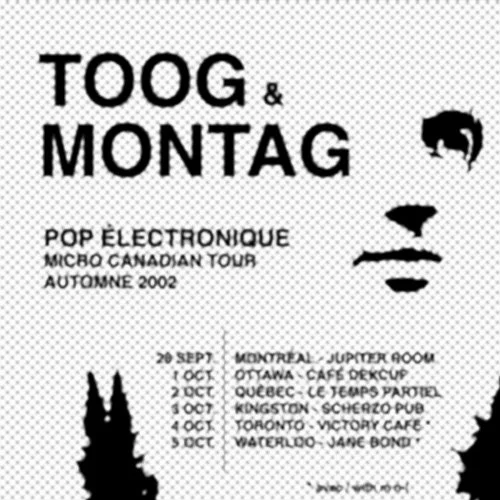
Montag's first album came out on CD in France in the fall of 2002, which made it harder to share my music easily back home in Québec. The cover is a slide of my mother's hands, photographed by my father — a quiet way for me to keep her present. I sent the disc myself to local papers, hoping for a bit of attention. The response was fairly positive, which gave me the motivation to organize a small, homemade Canadian tour to mark the album's release. My friend Toog joined Montag, generously coming all the way from Paris to accompany me in nearly empty bars in Ottawa — or worse still: Kingston. You have to start somewhere. I was then invited to tour France, from Paris to Brittany, no less — unimaginable to me just weeks earlier. I became friends with my labelmates, including Anthony and Nicolas from a duo making waves well beyond the Parisian scene: M83. A favourable review in Les Inrockuptibles made me jump for joy. You learn, later, to detach from that need, but in the early days, any positive word from the press felt like complete validation. And gradually, Montag received a little attention in Montréal — reviews in Voir and the Mirror, followed by invitations to collaborate with artists from the very eclectic Natacha’s Recordings label, such as Pierre Crube and Cyan Éthrie. I suddenly felt far less alone.
I went straight back to work. Unable to stop composing. I put out a few mini-albums locally (Les Bricolages, D'autres Bricolages, C'est l'hiver — yes, a Christmas mini-album — and so on), as a way to distribute my music more easily in Montréal, since the Gooom CDs were import-only and quite expensive. Burning each mini-CD-R (which became my go-to format, perfect for short releases) and assembling each sleeve by hand — I took immense pleasure in it. The tinkering was total: in the music as much as in the object itself.
ALONE, NOT ALONE (2004)
I didn't wait long before starting to think about my second album. The sound of Are You A Friend? already felt dated to me — maybe from having heard it too many times. To make sure I changed direction, I would compose by combining not samples found by chance on old records and keyboards, but recordings of acoustic instruments instead. Thanks to a CALQ grant, I was able to record about fifteen instrumentalists who responded to flyers I posted myself in music schools. A double bassist, a contrabassoonist, a harpsichordist... And a percussionist, Corinne René (with whom I still collaborate regularly today), who alone introduced me to a wealth of instruments, starting with the bell tree and crotales. It was an entirely different raw material that would make up most of an album made alone — but not quite alone either.
Another new ingredient: voice. From a fully instrumental sound, I timidly worked in a few sung passages, with the help of Ariel Engle (who later became La Force), and without whom I might never have had the courage. Amy Millan, from the band Stars, also agreed to collaborate on two tracks. I associate her voice with this era of Montag. It's thanks to Amy and Ariel that my music entered the world of pop music, since it was no longer strictly instrumental. I asked James Cargill of Broadcast if he'd be willing to collaborate with me on a track, and he said yes. To me, that felt like the ultimate validation. Montag, still very quietly, began walking with a slightly steadier step.
Alone, Not Alone came out in the fall of 2004 on Gooom in Europe, and a few months later on the American label Carpark Records, through which my music would finally be distributed in Canada. Todd Hyman's decision to sign me to his label changed everything for me. Releasing my music on American soil, I no longer felt that pressure to "export" myself just to exist as a musician. Carpark also became a new musical family for me — with Dan Deacon, and a few months later, the duo Beach House, who were releasing their debut album. Going by their Myspace page, no one knew them yet. In 2006, they opened for Montag at Pop Montréal. Hard to believe today. And the best part is that we became friends right away, with no idea they were about to become an international phenomenon.
The pressure to tour kept growing. The rise of the mp3 had already caused record sales to drop considerably, and you had to count on shows to make any money at all. But I really struggled with the live side of Montag. A tour with my friends Bryce (Vitaminsforyou) and Ghislain Poirier took me across Canada. I learned a lot, and it's a good thing I had good company, because I could feel I just wasn't made for the stage. So much so that I started seriously doubting my place in this "industry," where I couldn't help comparing myself to others. Then another review — this one for Alone, Not Alone — gave me wings: a review from Pitchfork, the indie bible whether you like it or not. Maybe Montag would find its place after all. But inside, allergic to the stage, I was still floating in some kind of endless doubt. Thankfully, Todd was there, encouraging me to keep composing.
GOODBYE FEAR (2005) — GOING PLACES (2008)
When I met Kris, I was about to wrap up a string of shows promoting Alone, Not Alone, ending with the 2005 Exclaim! Magazine Tour, which took me across the country from west to east alongside Feist, my friends Stars, and The Organ. Falling head over heels for Kris was reason enough to move across the country. He was about to finish his theatre studies, and most of the people around him were artists. As soon as I landed in Vancouver, jobless, I started writing new tracks. The idea of starting a whole new album felt a bit overwhelming, so for the time being I stuck to shorter formats. At a show in Japan the year before, I had met someone named Fuminori at the offices of Plop, Gooom Disques' distributor over there. We stayed in touch, and a few months later, he asked if I'd be interested in releasing a record exclusively in Japan on his label, Rallye Label. I said yes right away — "uh, yeah, absolutely." That became Goodbye Fear.
For me, this is something like Montag's golden age. Even though my voice was still pretty hesitant, I was getting closer to the sound I'd been searching for, and the tracks on it really sit right at the intersection of electronic and acoustic music. It's also much brighter compared to Alone, Not Alone. Makes sense — I was completely in love, and Vancouver kept revealing this natural beauty that no doubt found its way into the colour of my new compositions.
Even though the mini-album never came out locally, I started getting offers to open for other bands, and ended up travelling a lot. I made it to South by Southwest in Austin, Texas; I found myself in New York thanks to Carpark. Things were moving. With a fair amount of disbelief, I agreed to tour Japan with Au Revoir Simone, thanks to Rallye Records — two years in a row. Fumi, Annie, Erika, and Heather are angels.
Back home, the creative momentum never let up for a second. That's when I dove into an ambitious album: Going Places — with a thousand collaborations (M83, Owen Pallett, Beach House, Poirier, Au Revoir Simone, Leah Abramson, and more). I'd put out an online call for sounds so I could weave recordings from all over the world into the title track. Same instinct as always — reaching out to others so I wouldn't feel like I was composing alone. It produced this beautiful cacophony of sounds, all pulled from completely different contexts. I still love the idea that the track holds a whole crowd of "present moments," captured live as they happened. To this day, it's one of my favourite Montag pieces, because it brings together so many sonic textures that, to me, are all music. It came out in 2008, again on Carpark. I really let loose on that one, and for the first time on an album, I sang with a little more confidence — or almost.
PHASES (2012)
I'll always remember exactly where I was the moment I read the "RIP Trish" post on Nicolas Fromageau's Facebook page — ex-M83. It was snowing. The shock was total. We'd heard two weeks earlier that she'd been hospitalized after experiencing breathing problems, but I was convinced she'd pull through. In fact, she died of complications from severe pneumonia, just back from an Australian tour with a stopover in Singapore. One of the most beautiful voices I'd ever heard now existed only on Broadcast's records. That's really when I understood the full extent of what she'd meant to me. She'd opened the door to so much music for me, compilation after compilation — from Moon Dog to Ennio Morricone, by way of Vashti Bunyan, Wendy and Bonnie, and so much obscure electronic music. I owed her, I still owe her, so much. And in that moment, all I wanted was to create more. That same urgency to live. Phases was born out of that — another loss.
After Going Places, Montag hit a void. Two years had gone by since my last releases. Hibernation, a less inspired EP that told me the spark just wasn't really there anymore, then another EP I found more satisfying — Des cassettes et un Walkman jaune, a small compilation of covers of Low and The Breeders, among others. It was easier to throw myself into other people's music than my own. The idea of a whole album felt overwhelming, so I came up with a trick: starting in January 2012, I'd force myself to write two tracks a month for a year, like monthly 45s — an A-side and a B-side. By the end of the year, I'd have a full album, whether I liked it or not.
I'd seen a fantastic making-of of Blondie's Heart of Glass on YouTube, and I kept wondering why musicians so rarely talked about their creative process. At the time I thought — and honestly, it feels a little cringe now — that it might be interesting to expose mine. So I also made myself create a short audio documentary for each month's "single." And to push the challenge further, I set a few monthly constraints ahead of time: an acoustic track in August, a very pop track in January, a song in French in March (for which Pierre Lapointe even agreed to write the lyrics), and so on. It was the system I'd found to guarantee I'd actually finish an album.
Just like with Going Places, this album — which I called Phases — was full of collaborators. The list is long, but I have to mention Dominic Vanchesteing (real name Éthier) for his invaluable help with recording, Simon R. Tremblay (Native Cell), a longtime friend and collaborator and member of the fabulous Les amis au Pakistan, and, near the end of the journey — after the vinyl release in 2013 — Navet Confit and Mat Vezio, who became "my band" for three shows. I had nothing left to envy in anyone. Jean-Philippe, Mathieu, and I jokingly called ourselves "the fairies." In the end, Phases is without a doubt Montag's greatest pop achievement — once again, thanks to all its collaborators.
PAS DE SIGNAL / NO SIGNAL (2012)
Like a kind of parenthesis in Montag's discography, Pas de signal / No Signal was composed in just a few hours during train rides between Montréal and Toronto. There's nothing in the world I love more than writing music while watching a landscape go by. I think the making of Phases had been draining in its own way — I'd locked myself into such a rigid schedule that I needed to explore something else musically: instrumental compositions this time, and definitely more experimental, closer to ambient. The title came from the recent announcement of the end of analog TV signals. I'd bought a tiny black-and-white TV in Vancouver, and I used to enjoy watching shows on it just for the very retro quality of the image. But from then on, it could only produce white noise. That's what inspired the album's title and its overall concept: a tribute to a vanished technology. I didn't do much promotion around this digital release. The album is still sitting quietly on Bandcamp. You can hear a whole array of samples pulled from old broadcasts — each track corresponds to a different channel on those old TVs. Its atmosphere is somewhat haunting, like music that refuses to let the ghosts of television's past disappear.
PREMIERS BRICOLAGES / BONJOUR L'AMBIANCE (2026)
May 2026: it's decided — I'm releasing the very first Montag demos and other unreleased tracks from that era on vinyl. I called the record Premiers Bricolages because that's exactly what it is: tinkerings, my most imperfect compositions but also my most sincere ones. I wanted to give Montag the gift of having his first tracks come out on vinyl. To leave one more trace behind. After all, he deserves the tribute — it's thanks to him that I found the courage to compose, all these years.
Then, another surprise. While digging through old files like an archaeologist to build this website, I stumbled on an entire Montag album that had been sitting on my Google Drive since February 2020. A forgotten album. How do you forget you made a whole album, you might ask? Because it was forgettable... but not necessarily unworthy. The pandemic didn't help. One thing's certain: I realized I had composed Montag's final album — and that I wasn't ready, at the time, to release it, because it felt unfinished to me. It still does today, I'll admit. But in these ten final Montag tracks, I can hear something sincerely confused: a void, a mix of grief and transformation. I needed to go back to my roots — to a sound closer to my very first demos, music that wasn't meant for anyone but me. Until I rediscovered it, more than five years later. The title says it all: Bonjour l'ambiance. Mood description, check. And the "ambiance" — well, it's ambient, the kind of music I see myself making until the very end. It's essentially a farewell song, a ghost of an album. It's the sound of leaving, of fading out. Every track stretches on a little too long, as if to say: "this is Montag, I'm leaving now, it has to be this way."
I've decided the album will come out alongside the very first demos before the end of 2026. That way, Montag closes out his journey beautifully, with a double release acting like opening and closing parentheses.
But rather than ending on a false note, it's really Premiers Bricolages that marks Montag's true beginning. Most of the tracks on the record are the most honest ones I've ever composed — the most innocent, really, at their core.
Over time, I've come to realize that I only managed to exist musically because of him, as if Montag's music was never quite entirely mine. I owe him a great deal. Hence the importance of paying him proper tribute. This website is, in a way, his tomb — a trace of his existence.