





Who ?
I've been composing for over twenty years for theatre, film, dance, and all kinds of artistic fields — from circus to public art, various types of sound installations, podcasts and audioguides. Based in Montreal, I've worked with theatre companies across the country and many more artistic organizations such as the National Ballet of Canada, Moment Factory, the NFB, Télé-Québec, Radio-Canada, and many others. I composed and performed as a DJ under the name Montag for over ten years, which took me on tour across Canada, then to France, Japan, Mexico, and the United States. Just immensely lucky. Today my music travels differently — through sound installations, whether in the Tokyo subway, the Boston Science Museum, or the Diamant theatre in Quebec City. My sounds also wander through the streets of Montreal through the many documentary sound walks of the Portrait sonore mobile app. But theatre is what takes up most of my time. I never get tired of finding music to support a story, whatever it may be. And to my great delight, all these plays are performed on stages from coast to coast. Each collaboration has taken me a little further — geographically, but above all artistically. And finally, since I've also published a book (available in French only, unfortunately), I suppose you could say I'm also a writer — when the mood strikes…
As you may notice while reading through the texts on this site, it is in many ways a large thank-you card to all the people with whom I have had the privilege of creating. If your name only appears in the credits, know that I am no less grateful for what we have accomplished together. Each one of your ideas, each one of your projects has shaped me in unexpected ways. A heartfelt thank you to all of you.
That's the professional answer to the question "who?" — the more personal version (and much longer) is right here.
↓
“NONI”
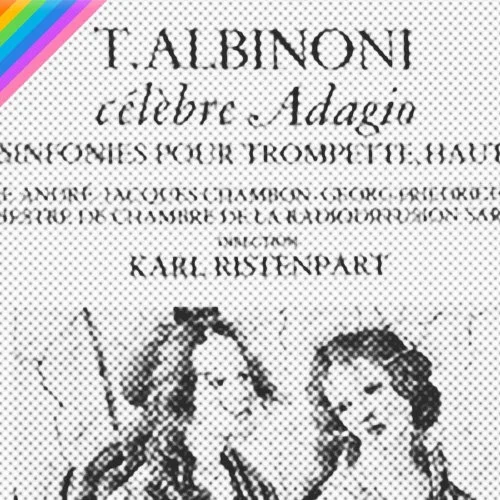
When my father lowered the needle onto a 1973 record every single evening, it wasn't to hear the Stones' Angie one more time — that song had become my parents' anthem — it was for me : Albinoni's Adagio. (Turns out he may not have actually composed it, but that's beside the point.) So it was to the sound of a droning organ and the pizzicatos of cellos and double basses that I would sink, almost instantly and without fail, into a state of suspension my body still remembers. The sound of the violin had a magical effect on me — a complete spell. No wonder I grew up to be melancholic. And the kicker? Apparently I said its name before I even said mama: Noni.
A LITTLE EARDRUM KILLER
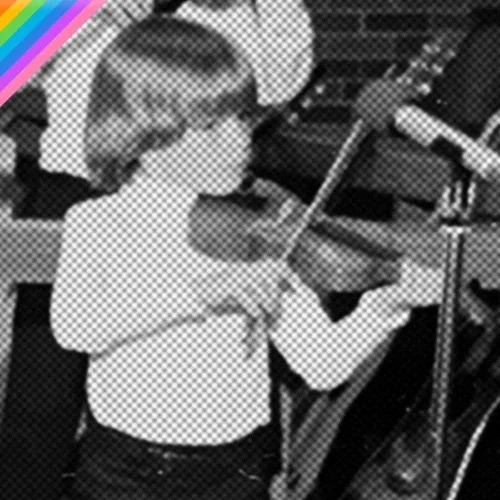
My mother knew perfectly well that her son had become Vivaldi's number one fan before even starting school. I still remember the moment she asked me if I'd like to play an instrument. "The violin." A dream come true for me — a nightmare for my parents, at least for the first two years. The only sound that, to my knowledge, surpasses the horror of a child playing a sixteenth* is nails on a chalkboard. Fortunately, I caught up later on. And the violin — classical music — was part of my life every single week for over a decade. From the Lanaudière music camp all the way to a cheesy TV show called Star d'un Soir in which I featured (yes, you read that right).
*the smallest of violins.
DELUXE MUSIC CONSTRUCTION SET
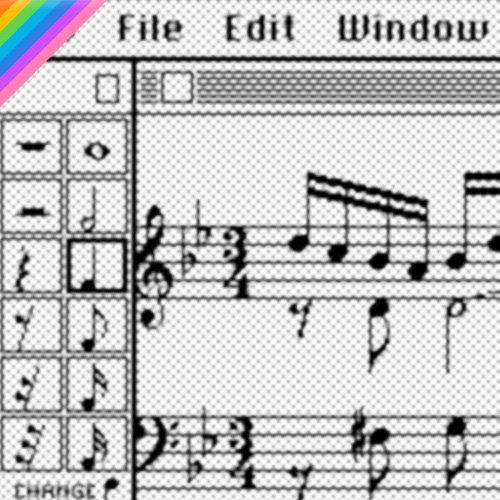
That was the name of the software on my father's Macintosh Plus where I made my first compositions — and I use that word loosely. For the geekier among you, watch the first few seconds of this video, then skip to 6:45 and you'll understand everything. The result: short, unlistenable sonic explorations that could be described as lo-fi electronic baroque — but that I loved listening to on loop for hours, all saved on floppy disks long since lost. Without knowing it, I had arrived at the intersection that still lives in me: electronic and classical. How lucky to have been born in the age of computers — even at their most primitive. It's still magic to me, all of it.

MY FIRST SYNTH
I had no idea that one day my first Walkman could be dethroned by another "toy": a Yamaha PSS-270 given to me by my father, capable of playing — drumroll — 100 sounds. And a few pathetic beats… not to mention the truly horrifying auto-arrangements. It didn’t matter: for me it was pure ecstasy. I played on that keyboard so much that I feel like I practically lived there. Every sound — from the enigmatic "Comet" and "Crystal" to waves of degraded digital white noise ("Wave") — all of it from that little synth and its cheap electronic sounds made its way into my musical DNA. Thanks dad.
FFW >>
There was always music everywhere-all-the-time at our place. In the living room, in the kitchen, in the car, morning and night. My father was the first culprit with his record collection that seemed infinite to me — tons of LPs, piles of 45s, and with the arrival of the CD replacing suitcases full of cassettes, it was exponential. There was a lot of boomer music: the Beatles and the Stones, of course, psychedelic surf rock, The Seeds, Blue Cheer, and plenty of guitar. Prog rock was huge too: Supertramp's Even in the Quietest Moments, released the year I was born, was the most supreme of classics for my dad and I. Donovan, Dylan, Peter, Paul and Mary, Led Zep and a whole lot more — my father was my first musical encyclopedia. He also taught me to listen to music without necessarily liking it right away, to look for what makes it distinct, its texture, its colour. Steve Reich, Philip Glass, and so many others came along to open my ears even further. Thank you Denis.
Music wasn't just at home — it was everywhere else too. Marie-Élizabeth, the older sister of my best friend from school, eight years older than us, listened to music we found so "modern": Anne Clark, Depeche Mode, Kraftwerk, The Cure, New Order, and other far more obscure synth pop bands, not to mention Niagara, Bérurier Noir, or Etienne Daho on the French side. Very Euro. If there was a synth involved, I was automatically sold. Perfect material for making our annual "best of" compilations on cassette. Everything was inevitably cult for the music fan I had always been. Through all these bands, music was more than a world unto itself — it had become an identity. You become the music you love. Thank you Agnès. Thank you Marie.
SIMON
- What's your favourite Cure album?
- Pornography. Yours?
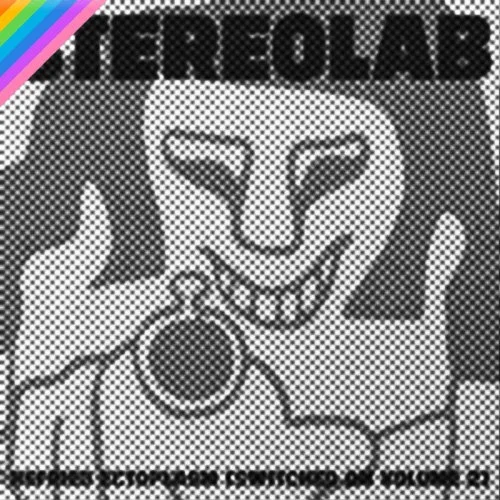
I had dared to ask because Simon had a The Cure badge on his bag. We were clearly from the same tribe. I had to admit it to myself: Simon knew British pop way better than I did. I was a Smiths fan and that whole scene, but I had mostly stayed stuck on A Head on the Door — quite a bit lighter — and especially Standing on a Beach, a cassette compilation I loved listening to while reading science fiction, mostly The Martian Chronicles by Ray Bradbury. For me, the two together were the equivalent of trying hard drugs. Guaranteed astral travel. No wonder I always made sure to glance toward his desk when he walked into class, because he had this habit of dropping off cassettes there. Joy Division, Cranes, Suede, Saint Etienne. Then one day he hands me a tape. "Give this a listen, I think you'll like it." He had cued it to one track in particular. French Disko. Stereolab instantly became one of my greatest musical obsessions... And to tell you how lucky it feels to love a band like that — one that evolves in a completely transformative way, explores forgotten musical territories, openly finding inspiration from jazz to Brazilian music, from 70's experimental German rock to Marxist theory. No single band has ever made me feel as much. The fact that Laetitia Sadier's lyrics are both so philosophical and so poetic has a lot to do with it — coming from someone who doesn't usually pay much attention to song lyrics. Tim Gane and everything he has composed makes me realize how lucky I am to love music as much as I do. An obsession, then. And it continues.
Thank you Simon.
Thank you Stereolab.

FROM JETGIRL TO JETBOY
A die-hard fan of L'Exil ésotérique on CISM, the University of Montreal's radio station, I had the nerve to pitch my own show before I had even finished college. I had imagined L'Étranger as a show dedicated to... strange music. A telling title: I was a 17-year-old literature student after all, so why not reference Albert Camus and at the same time a early The Cure song, itself inspired by the novel's opening lines. I had carefully put together my demo, recorded with whatever I had on hand, and went to drop off the cassette in person. The station's offices and the people there were intimidating. "Fingers crossed." Suspense. Project accepted — I couldn't believe it. Time slot: midnight to three in the morning, Thursday night into Friday. Past midnight: no quota, total freedom over the playlist. For me, pure joy. The studio becomes my refuge, turning at night into a kind of space capsule with its 70s console and its glowing yellow and red buttons. Hard to believe I was studying law at McGill at the time. The contrast between Chancellor Day Hall and the CISM studio couldn't have been greater. One day, while listening to new arrivals at the station, I start hearing British music coming from the next studio over. It's Elsie Martins hosting Jetgirl, a britpop fanatic just like me. An instant friendship built around a shared love of Pulp, Elastica, Echobelly and more. I suddenly felt less alone in my obsession. A few weeks later, our show was caleld Jetgirl, Jetboy. But Elsie has to jump ship after being chosen by Musique Plus to become a VJ. I take over solo. I would host Jetboy for the next six years — first focused on britpop, then on pop from across Europe.
Thank you Elsie.

OHNE
It's at a shop called L'Oblique that my ex Patrice had spotted a bulletin board notice: "Looking to form a band — influences: The Breeders, Stereolab, Sonic Youth, Broadcast." Well, another Lab fan. Next thing I know I have the phone number of a certain Olivier, who would become my first roommate and a very good friend. We never quite had the courage to see our band project through — we had named it Ohne, "without" in German, maybe because deep down we didn't really want a band at all — but the two of us composed a lot between listening sessions of our new records, starting with Stereolab's. There was something truly joyful about living with someone who loved music as much as I did, and the same music at that. We would spend entire evenings talking about nothing else, taking turns noticing the finest details in their arrangements. When it came to making our own music, we relied on the Korg Polysix that Olivier had and my Yamaha CS-20M, which I had bought at 18 from the now-gone Technopolis, a vintage synth shop near Laurier station. Together we managed to dive into compositions that perfectly explored the sonic dimensions of the bands we both idolized. Olivier was particularly driven when it came to harvesting samples from concrete and contemporary music vinyl records we borrowed together from the Phonothèque, on the corner of Roy and Saint-André. It was a tedious task that didn't slow him down for a second. We would go through tons of records together — Varèse, Stockhausen, and other unlikely music with covers to match — searching for the right sound to loop on an old floppy disk sampler to build our next track. A technique that would serve me well later and that became the foundation of my first compositions of my own. I would never forget that my path as a composer was born out of that collaboration. And that great friendship.
Thank you Olivier.
JETBOYS BECOMES A DJ
Walking past the corner of Saint-Laurent and Duluth, a short distance from our apartment, I discover a new bar that's hard to miss. A slightly retro-futuristic decor, a mosaic of square panels in different shades and mirror, felt banquettes. It had just opened: Laïka. The place felt too cool for me. I had immediately noticed the top-of-the-line DJ setup, impeccably placed in a custom-built rolling module whose finish matched the walls. I told myself I had a few records at home that might just fit the vibe. So I showed up there, working up my nerve, to offer my services. The owner, the tall and elegant Bruno Ricciardi-Rigault, welcomes me. His charm and ease are almost intimidating. "Sure, come on Mondays and we'll see," he eventually tells me. And that’s how , for two years, I would still be bringing my milk crate full of vinyls to mix at what was, in my opinion, one of the most beautiful bars in my city. Nothing but good memories to the sound of To Rococo Rot, Fridge, Tarwater, Air, remixes of Stereolab and The High Llamas and other retro-sophisticated-post-minimalist atmospheres. I think every dollar I made at Laïka went straight into the pockets of the local record shops — L'Oblique and Disquivel most of all. After all, I couldn't play the same things forever... Sharing music again and again is a way of celebrating it — one of my favourite things in the world, and something that always ends up sparking good encounters. To love the same music is to belong to the same world.
Thank you Bruno.
BROADCAST
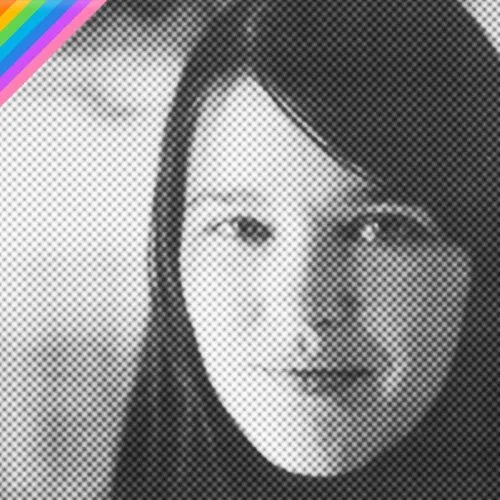
The greatest privilege my status as a radio host gave me — and that's a big word for it — was not only to be even more immersed in music, but above all to get to meet musicians when they came through Montreal. But when I found out that Broadcast were playing their first concert in North America to mark the 10th anniversary of British label Warp Records, I made myself a promise: I would be there, and more importantly, I would get an interview. Lucky break — since I had already interviewed Stereolab, their manager Martin Pike, who also managed Broadcast, remembered me and immediately agreed to let me interview the group. It was obvious Olivier would be coming with me.
Arriving in the hotel lobby where we had been told to meet, I nervously wait for Trish, James, Tim and Roj... It wasn't my first interview, but I wondered what the band would think of a still-pimply "journalist" who had come all the way from Montreal just to meet them, little cassette recorder in hand. Not exactly the New York Times. The introductions are awkward, but what was supposed to be an interview slowly became a natural conversation, despite a few nervous laughs. Just as Martin came over to tell the band to get ready for that evening's show, James invites us to join them backstage after the concert. Disbelief.
The show at Bowery Ballroom is an interstellar music moment for both of us. Every kilometre spent on the freezing unofficial bus that stopped twenty times over a ten-hour ride suddenly made sense. Broadcast were sublime. I leave with the promo CD of their upcoming debut album, The Noise Made by People. And inside the sleeve, something that would change my life: their email address, written by hand by James.
Thanks "Jam".
TOOG - AKA GILLES WEINZAEPFLEN
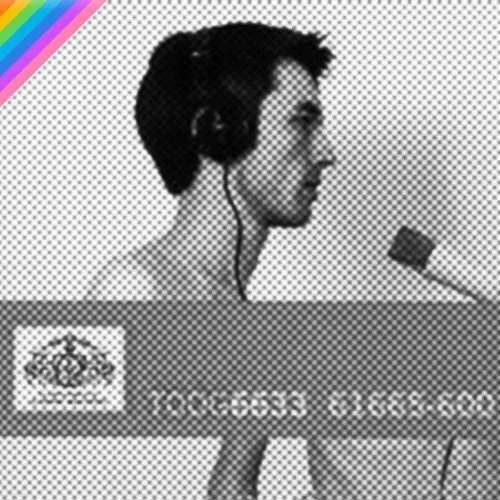
Among the people I interviewed for my show who left the biggest mark on me: Sarah Cracknell from Saint Etienne, Eirik Glambek Bøe from Kings of Convenience, Laetitia Sadier from Stereolab, no surprise there. And even higher on the list: Gilles Weinzaepflen, poet and musician who records under the name Toog. Less than a month after the Broadcast show, I spot a small listing on the now-gone ICI that Toog, recently signed to the very trendy label Le Grand Magistery (just like Montreal’s Stars) would be passing through Montreal on a tour with British artist Momus and Japanese artist Kahimi Karie at the (also now-gone) Jailhouse Rock Café. I had gotten my hands on his first album 6633 and I loved everything about it. Everything. The humour, the unlikely synth sounds, and that soft voice that recites as much as it sings. Electronic theatre. And in French, no less.
Toog’s music hinted at a curious character — one I immediately became curious about myself. Interview request sent, and a few days later the show's promoters were welcoming me into the dark, heavily smoke-scented room. Gilles is there. Our friendship was instant. For me at least. I hadn't yet met many French-speaking artists who lived on "my planet" musically speaking. Gilles's humour was, to me, the best kind — absurdly absurd and brilliant. I was so happy to discover that you could be a musician without taking yourself seriously, coming from someone who had a tendency to see his favourite musicians as demigods. The very existence of Toog was proof that you could make music alone and that the band didn't have to be the ultimate goal. After our meeting, Gilles and I kept in touch by email, where he would send me some of his poems. I found them beautiful. Every time. All of this without imagining for a second that we were about to go on tour together.
Thank you Gilles.
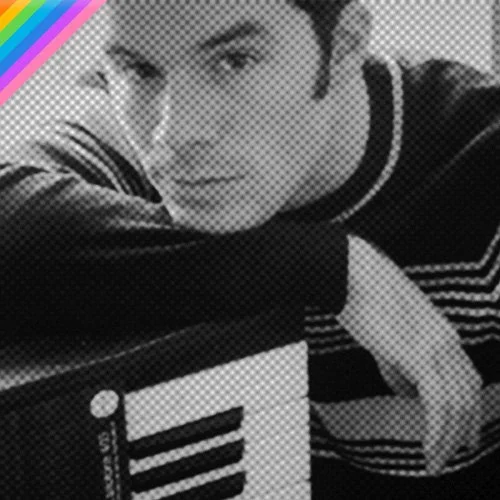
MONTAG
Two months after my mother's death, Broadcast played a show at the Cabaret — their first in Montreal. Completely lost in the fog of grief, I saw in my reunion with James and Trish a little bit of light. Their correspondence already meant so much to me, and I still couldn't quite understand why they would want to maintain a friendship with a fan from the other side of the Atlantic. We had been exchanging emails every month for a year by then. They had been once again — in my eyes and ears at least — extraordinary. I had mentioned to them that I was starting to compose music too, with Olivier, "nothing serious." To which Trish replied, looking me straight in the eyes: "You know, if you make music everyday, something good's going to come out of it. Eventually." Those words were engraved in my mind.
As we were saying goodbye, Trish told me I was welcome if I ever made it to England. An invitation I didn't forget either — so much so that I found myself at their place a year later, then a second time in 2003 before opening for them in Montreal and Toronto. Who could have imagined something like that? Not me, and I still can't believe it. Even if I understand that my friendship with Trish was tied above all to the intensity with which we both loved music, and sharing it.
It was Trish who first managed to convince me that I was capable of creating something on my own, at a time when I could only dream of it. And that's how Montag was born. An alter ego inspired by the main character of Ray Bradbury's novel Fahrenheit 451, which I had seen adapted for the screen by François Truffaut in an English class. In the story of Montag, Trish is the one who welcomed me to the other side of the river among the Book People — people who devote the same dedication to music as I do. I was finally ready to venture out alone into what would become my music. Collages of looping electronic and discreet acoustic sounds that healed me from the loss of my mother better than anything else.
Thank you Trish. Thank you Montag.
ARE YOU A FRIEND?
Jetboy becomes Jetboy Jetgirl again after I meet Mathilde. A passionate fan of all kinds of music, openly queer, she had danced her way through all of Paris, to every kind of sound. All we do is talk about music. And since I was starting to find hosting alone a little lonely, sharing the mic felt like the natural thing to do. One day I played her one of my very rough tracks and, eyes wide open, she said: "You absolutely have to send this to Gooom." - “ To who?” She explains it's a French minimalist electronic label that puts out music by artists like Mils or Anne Laplantine. "Anne who?" I go ahead and do it — one more bottle tossed into the sea. I had approached two or three other labels already and didn't really believe anything would come of it.
A few weeks later, I get an email from Jean-Philippe Talaga, whose name I already knew because I had written it on the envelope. He asks for my phone number, everything moves fast. It rings. "Listen, we love your tracks, we're putting this out as is." I'm completely floored. I had burned nine tracks onto a CD-R, but turning that into an album... In my head these were just rough, poorly produced little things. I came to understand that Montag had the right to exist outside of my small home studio. Since my mother's death, I had felt an extreme urgency to live. And making this music was both my reason for being and my outlet.
Are You a Friend? came out on CD in France in the fall of 2002, which made it hard to share my music back in Quebec. The local press reactions being fairly positive, I found the motivation to organize a small DIY Canadian tour myself, with my friend Toog, who generously came all the way from Paris to join me in nearly empty bars in Ottawa — or worse: Kingston. You have to start somewhere. But I had no idea I was about to be invited to tour France, from Paris all the way to Brittany, no less. Unimaginable to me just a few weeks earlier. I became friends with my labelmates, including Anthony and Nicolas from a duo making waves beyond the Parisian scene: M83. A review in Les Inrocks - a hipster music magazine - made me jump through the roof. You learn to let go of that kind of thing, but at first, that kind of recognition lifts you completely off the ground.
Thank you Lamathilde. Thank you Jean-Phi.
ALONE, NOT ALONE
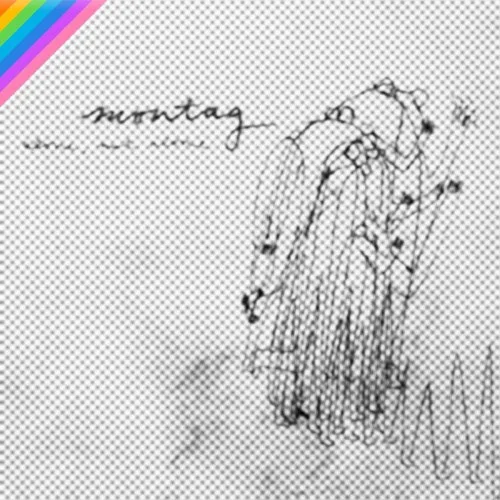
I didn't wait long before thinking about a second album. The sound of Are You a Friend? already felt dated to me, maybe from having heard it too many times. To make sure I was moving in a different direction, I would compose by assembling not random samples found on old records and keyboards, but recordings of acoustic instruments instead. Thanks to a grant from the CALQ, I was able to record about fifteen musicians who had responded to posters I had put up myself in music schools. A double bassist, a contrabassoonist, a harpsichordist... And a percussionist, Corinne René — someone I still collaborate with regularly today — who on her own introduced me to a whole world of instruments, starting with the bell tree and crotales. It was a completely different raw material that would make up the heart of an album made alone, but not entirely either.
Another new ingredient: voice. From fully instrumental music, I timidly added a few sung passages, with the help of Ariel Engle (now known as La Force), without whom I might never have had the courage. Amy Millan of Stars also accepted to collaborate on two tracks. I associate her voice to that era of Montag. It was thanks to Amy and Ariel that my music entered the world of pop music as it was not instrumental anymore.
Alone, Not Alone came out in the fall of 2004 on Gooom in Europe and a few months later on American label Carpark Records, un des rares labels d’électro minimale de ce côté-ci de l’océan. Todd Hyman's decision to sign me changed everything. Carpark was also a new musical family for me — Dan Deacon, and a few months later the duo Beach House, who were releasing their first album. Going by their Myspace page, nobody knew who they were yet. In 2006, they opened for Montag at Pop Montréal. Hard to believe that today. And the best part of all is that we became friends right away.
I struggled a lot with the live side of Montag, but I understood it came with the territory. A necessary step that kept me in constant doubt about my place in this "industry," where I couldn't help but compare myself to others. Luckily, a review in Pitchfork — the indie bible, whatever one thinks of it — made me feel like I might have a place after all. But inside, allergic to performing live, I was still floating in a kind of endless doubt. Lucky for me, Todd was there to encourage me to keep composing.
Thanks Todd.
GOING PLACES
When I meet Kris, I am about to finish a run of concerts promoting Alone, Not Alone, ending with Exclaim! Magazine's 2005 tour that would take me across the country from west to east alongside Feist, Stars and The Organ. Falling for Kris was more than worth moving to the other side of the country. He was finishing his theatre studies and most of the people around him were artists. I was told that Vancouver was short on sound designers for theatre, and quickly a first project came my way: Recovery by Greg MacArthur, a dark dystopian story in which people succumb to the addictive pleasures of a mysterious new substance. For the first time I find myself creating not just music, but sound effects too. I take to it immediately, even if the live aspect terrifies me — and that hasn't changed since.
What I love about theatre is finally being part of a team. Being Montag could be a very lonely thing, and I always envied the bands I met on the road, who seemed to share a kind of family spirit. I think of Stars or The Dears, who I had met right at the start of their careers. Being several people seemed so much easier, despite the friction it could bring. But that solitude wasn't total: Montag allowed me to meet all kinds of people all over the world — shows across Canada first, then Mexico, the UK, Singapore and various places throughout the US. I get invited to open for a band in Tokyo. Pure unreality.
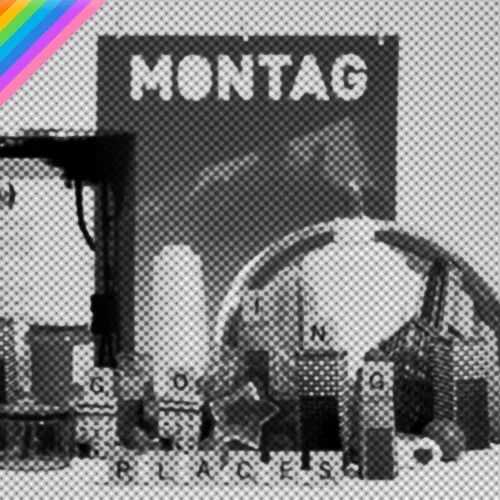
But my most memorable tours are in Japan with Au Revoir Simone. Annie, Erika and Heather are angels. A Japan-exclusive Montag release, the EP Goodbye Fear, was good enough reason to go back two years in a row with them. And the creative momentum didn't stop the whole time I lived in Vancouver. That period saw me release small handmade EPs on mini CD-Rs, a format I love. There were also more theatre projects, and another album — Going Places — full of collaborations (M83, Owen Pallett, Beach House, Poirier, etc.), released in 2008, still on Carpark. I had put out an online call for sounds so I could weave recordings from all over the world into the title track. Always that same need to reach out to others so I wouldn't feel like I was composing alone. It resulted in a beautiful cacophony of sounds captured in all kinds of different contexts. I still love the idea that the track contains a crowd of "present moments" caught on the spot. That track is to this day among my favourite Montag pieces because it brings together so many sonic textures that, to me, are all music. I was really having a blast — and for the first time on an album, I was owning the fact that I sing. Almost.
Thank you Kris.

MEC PLUS ULTRA (AKA MPU)
I was happy to be back in Montreal after returning from Vancouver in 2008. I had missed the culture. The nightlife too. At a big party I threw at my place, I invited François, someone I had collaborated with remotely on TV shows he was editing, for which he had asked me to compose a bit of music. He introduces me to Julien, a graphic designer friend of his. The two of them tell me how unbearably boring the Village has become, with the same commercial music everywhere. We agreed it would be pretty great if Montreal could have gay nights outside the Village, like in London or New York. We found that kind of ghettoization unfortunate, even if we also understood it was inevitably necessary. Why not throw the party ourselves? Julien would do the logo, François would handle the visuals and could DJ alongside me, to offer something different musically. Montag was about to become a club DJ.
Our trio had a name, l'Amour à trois™, and so did our night: Mec Plus Ultra. We approached different bars and it was at the Belmont that we were welcomed most warmly by Alessandro, a gentle giant. The success was instant. MPU — a more inclusive name than the original — became the longest-running gay night outside the Village in Montreal. Completely wild themes from one month to the next, and DJs by the dozen, including bands like The xx or Black Tiger Sex Machine, and even Dragonette coming to DJ after their show in town. Lineups that never seemed to end. A phenomenon. Julien moved to London a year after we launched. Guillaume joined the trio. I left the ship after ten years. And François kept it going all the way to 2025. Nobody saw that coming.
Thank you François, Guillaume and Alex.

PORTRAIT SONORE
In the months following my return to Montreal, another encounter would change my path as a composer — the one with Sophie Mankowski. She had come up with the idea of creating an audio guide about Montreal's modern architecture and was looking for someone to create the musical accompaniment. I started seeing Montreal differently, recording its ambiences, but also translating iconic places like Silo No. 5 and its massive steel cylinders into sound. It was a dimension of sound I hadn't explored yet. Our collaboration grew into a co-foundation: the non-profit Portrait sonore was born. Walking tours from coast to coast, then focused on Montreal. It led me to study the relationship between music and architecture during a residency at the Banff Centre in Alberta. How can a space dictate a musical structure?
Over the years, I invited collaborators — musicians, actors — to enrich our tours. In each project, the exercise has stayed the same: imagine the music that belongs to a specific place in the city. Almost twenty years later, I am still composing for places — a back alley, a library, a sculpture, a mural...
Thank you Sophie.
PAUSE AND PHASES
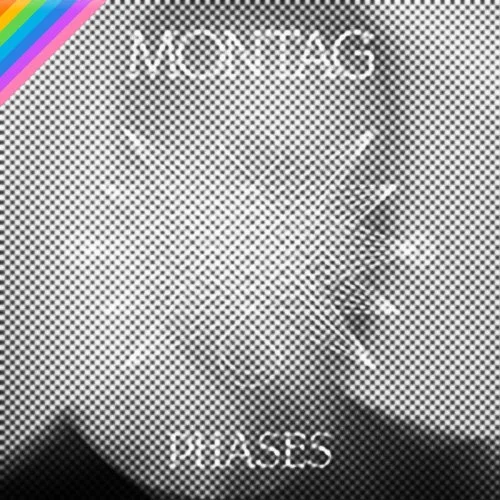
I will always remember where I was when I read the post "RIP Trish" on Nicolas Fromageau's Facebook page, former M83. It was snowing. The shock was total. It had been announced two weeks earlier that she had been hospitalized after experiencing respiratory problems, but I was convinced she would get back on her feet. In fact, she died from complications of H1N1, which was devastating in Asia, just after returning from an Australian tour with a stopover in Bangkok. One of the most beautiful voices I had ever heard now existed only on Broadcast's songs. It was really then that I understood the full extent of the role she had played for me. She had opened the door to so much music for me, one compilation after another. From Moon Dog to Ennio Morricone, through Vashti Bunyan and Wendy and Bonnie. All I wanted to do was create more. That urgency to live again. Phases was born from that.
After Going Places, Montag went through a void. Two years had passed since my last releases: Hibernation, a less inspired EP that was telling me the flame wasn't really there anymore, then another EP that felt more satisfying to me — Des cassettes et un Walkman jaune, a small compilation of covers of Low and The Breeders, among others. Easier to dive into other people's music than my own. The idea of an album felt overwhelming, so I came up with a strategy: starting in January 2012, I would force myself to compose two tracks a month for a year, as if it were monthly 7” records, a side A and a side B. By the end of the year, I would inevitably have a full record.
I had seen on YouTube a fabulous making-offor Blondie's Heart of Glass and wondered why musicians so rarely talked about how they compose. I thought at the time — I find it borderline cringe today — that it was surely interesting to expose my creative process. So I also committed to creating a short audio documentary for each monthly "single." And to add to the challenge, I set a few monthly constraints in advance: an acoustic track in August, a very pop track in January, a song in French in March (for which Pierre Lapointe actually agreed to write the lyrics), etc. It was the system I came up with to be productive and achieve the goal to finish a record.
As with Going Places, collaborators were plentiful on this album I called Phases. The list is long, but worth mentioning are Dominic Vanchesteing (Éthier) for his help with recording, Simon R. Tremblay (Native Cell), a long-time friend and collaborator and member of the fabulous Les amis au Pakistan, and toward the end, after the vinyl came out in 2013, Navet Confitand Mat Vezio who became "my band" for three shows. I had nothing left to envy anyone. Jean-Philippe, Mathieu and I called each other “fairies” just for fun. Magical times. In the end, Phases is without a doubt my greatest pop achievement, once again thanks to all its collaborateurs.
Thank you les Fées.
WRITING
Another death, inevitably. My father's this time. A palliative care physician himself, he was among the first in Quebec to request and receive medical assistance in dying. That was in 2016. Needless to say, his departure wasn't easy for me. I tried to create music to keep my head above water and, without understanding why, everything felt off. The connection between me and Montag was gone. Luckily, theatre and other commitments kept me very busy — big projects with Robert Lepage among others, but also with extraordinarily talented directors who quickly became long-time friends and collaborators: Sébastien David, Louis-Karl Tremblay, then Maxime Carbonneau, to name just a few.
I felt I needed to find a way to process what I had been through with my father and, naturally, already immersed in sound, I thought about creating a podcast on our collective relationship with death. Things were moving forward, and then — boom: pandemic. Radio-Canada, who was supposed to produce my project, pulled out. The public broadcaster preferred to air something more "entertaining." A massive blow. I got over it by deciding to write. I went and knocked on Atelier 10's door, and its editor-in-chief, someone I had met at university, opened it for me. I discover that writing is not something you do alone. Editor Vanessa Allnutt would guide me through every last detail of what would become a book. I put a lot of heart into it, but it's clear I would never have crossed the finish line without her.
Since then I've been invited to speak at conferences on palliative care and grief — something I could never have imagined doing before. With music on the back burner, it was the writing of Mettre la mort à l'agenda (putting death on the agenda) that changed the way I see my father's passing. The page has finally turned.
Thank you Nicolas. Thank you Vanessa.
THE SHELTER
A pandemic. A damn pandemic. It throws everything into chaos — we count the dead, we find ourselves on screens non-stop, we question everything. For me, in all the anxiety I was living through, it meant asking myself how we, as musicians, could be of service during a crisis like this. Reinvent ourselves? Give me a break. Music had always been therapeutic for me, but it was now becoming essential. I wasn't about to take Montag out of the freezer. I needed something else. A different kind of music too. One that very consciously sought to heal, to calm, to get through this more than strange period. For myself, and for others just as much. So I thought of the name L'abri (the shelter) — it was all that was left to do: find shelter in music to protect yourself from all the surrounding adversity.
As usual, I didn't have the heart to create alone, so I reached out to my harpist friend Éveline Grégoire-Rousseau, with whom I had already collaborated a few times with real joy, to ask if she would be willing to create some on-the-spot compositions with me, with the main goal of bringing calm. New age? Yes, maybe. I felt very strongly the need to wrap myself in that kind of atmosphere. Soft music, simply put. We didn't waste any time: two tracks a week for the first two months of the pandemic. Éveline's harp, sometimes untouched, sometimes run through my machines, with recorded city ambiences in the background. From the slightly convoluted name L'abri + EVELINE, we went with Une aube in 2025, when we re-released these tracks that had been sitting on Bandcamp. You don't make much noise with this kind of music. Rêves en cours came out quietly, noticeably more experimental than our first compositions. But I'm no less proud of it.
Merci Éveline.