Last releases
Bonjour l’ambiance / Requiem
How do you forget an album you composed yourself? When the music is forgettable. Or when it brings you back to a period too painful. With Bonjour l'ambiance / Requiem, it was both at once. When I was composing it, I thought the music wasn't up to par, and in many ways, that hasn't changed. I tend to be far too critical of myself, especially right after a piece is born. But with hindsight, I decided to release the album anyway. Montag's last musical breath.
In 2002, two years after my mother's death, came Are You A Friend?, my first album. In 2020, four years after my father's death, I began a fifth without thinking. Each time out of necessity. Bonjour l'ambiance was composed and recorded in record time for Montag: less than a month. I'd had the idea for the title years earlier. The occasion had come to use it, because it described my state perfectly. I felt an enormous need to make something, quickly, so as not to reach the point where you want to give up on everything. It mattered to me to finish it, no matter the result, and no matter whether it would ever come out. So I gave myself permission not to apply myself as much as usual: I wanted sounds made on the spot to pull me out of my grief. Unable not to judge my own music, I wondered who would want music so mired in sadness. As I composed these tracks, I realized Montag was dying in my hands. / Requiem was added to the title later, to mark Montag's end. But at first, I simply couldn't believe it. Maybe forgetting the album was deliberate after all.
What didn't help me find any more confidence in what I was doing was that I'd "dropped" Montag more than seven years earlier. Not a single track, nor show. With this new album, I couldn't even hope for a semblance of a "comeback" (huge quotation marks), especially with ambiances this slow and abstract. I was moving away from pop to return to Montag's roots: minimal, atmospheric music, strictly for personal use, in the middle of grief.
After my father's death, I felt a sense of injustice and anger at his decision to seek medical assistance in dying, only a few months after it was legalized. I had accepted his choice so poorly that I wanted to exorcise my rage by writing our story. It became Mettre la mort à l'agenda, a writing project I carried for years. The other obvious grief was no longer having the time to focus on my own artistic practice, too busy composing for theatre, dance, film, and a thousand other projects. Not that this kind of work displeased me, but it took up so much space that it left Montag on life support.
That long sedation was due, among other things, to my choice to stop making pop. I no longer felt capable of it after being, all in all, disappointed by the reception of Phases (2012), my greatest push toward something more frankly pop. That impulse had, however, driven me to outdo myself in my handmade collages, and I'd even managed to put together a band (thanks Navet Confit and Matt Vézio) for the length of three concerts. But going on tour was unthinkable, with no means, with nothing. Without a tour, Montag would inevitably cease to exist. Giving up concerts came fairly easily, since I never had anything of the showman. Montag's music was never conceived for the stage, but for the studio — a music turned inward rather than outward. It always consisted of creating sonic spaces made to measure to soothe me, to channel an overflow of joy (Going Places) or grief (Alone, not alone). Sounds as refuge, as lifeline.
If I had the confidence to share Montag's music in the first place, it was precisely because he was my alter ego: as if it were him who'd created it, not me. No one was meant to hear what I'd composed through him, it was strictly for myself. Who would care anyway? The album was born the same way, and I had Montag's help to do what he lets me do so well — as Bradbury's character does too: flee.
That's exactly what this album let me do, and I remember suddenly breathing better, even though the music is terribly sad (Ce qui ne revient pas). Beyond the irony of the title, the word ambiance was a way of naming the ambient music that had already been occupying my mind for a while. As in Montag's very beginnings, the album is a collection of little doors opened onto invented elsewheres. The only trace of the real lies in sounds captured by chance across the city or in the countryside, textures that melt into the music and conjure up landscapes. One new element: virtual instruments, almost absent from Montag's tracks until then. I even felt a little lazy for not pulling out my old synths like in the old days. But the rest is made from the same Montagian recipe: collages of acoustic and electronic sonorities, sometimes recorded by me, sometimes found on old vinyl… all of it assembled with no precise goal. You can hear it, but that was exactly what I wanted. It's Montag at his most unfinished, and yet something about this near-automatist approach pleases me. It came together so fast that I forgot it. I saved the "final" files on a drive in February 2020, knowing all too well I could have reworked each track endlessly. The pandemic, that great blur of time, would surely deepen the forgetting that followed.
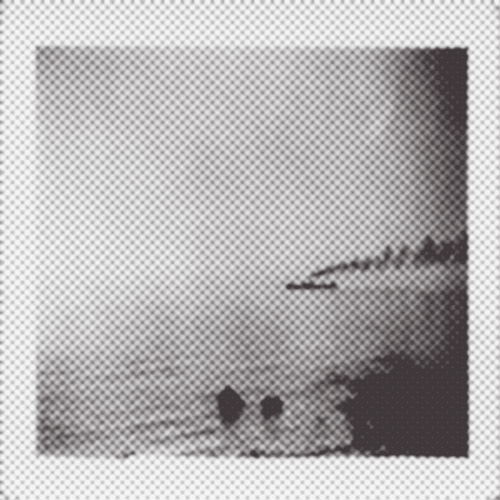
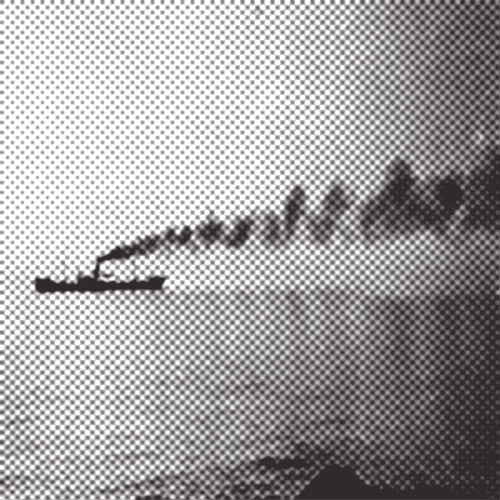
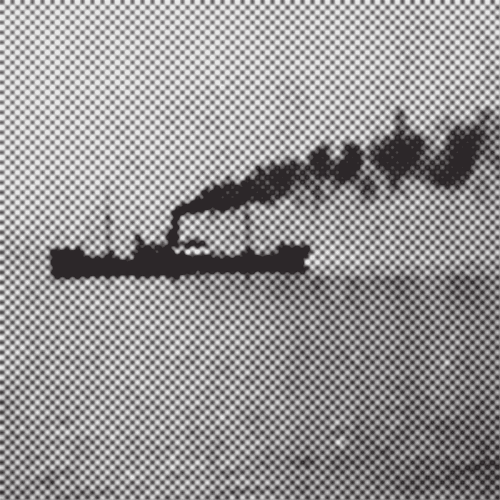
Bonjour l'ambiance / Requiem is like an unfinished painting. The album's sound is that of absence, of the void to be filled, of blur, of involuntary erasure, of the solitude that doesn't want to be alone (Montag was always a project that aspired to become a band but that deep down always ended up terribly solitary). The sound of farewells without knowing it. Even without inspiration, Montag held on right to the last minute of his last track (Loin). It's as if he were resisting his own disappearance at the end of a slow, fatal fade out. Like the trail of black smoke dissipating in the photo on the cover — an image I found among family photos my great-aunts on my mother's side had given me. No date, no writing. The image fit the title well, and Montag's end: smoke fading away, the vessel of a farewell.
Premiers bricolages
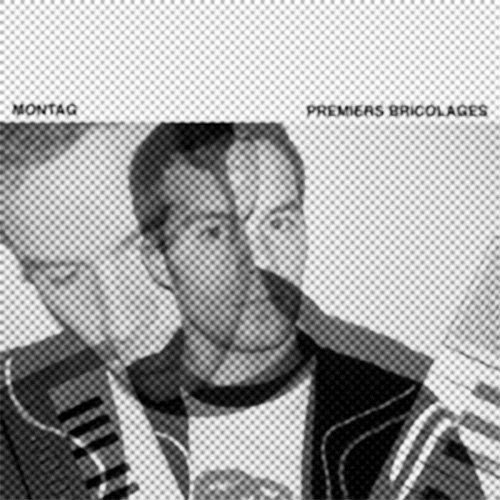
When I made the decision to put an end to Montag, it wasn't exactly with a light heart. But after nearly ten years of inactivity, I had to face the obvious: I had moved on. I was no longer Montag. So I decided to pay tribute to the character I had invented for myself, to thank him for giving me the strength to create my own music. The intention to gather unreleased tracks from my early days onto a record doesn't come from the fact that they are particularly brilliant. I found it more interesting to see this compilation as an archival document.
Premiers bricolages (roughly "first tinkerings") was a way for me to share this music — not for its "quality," but for the stories that brought it into the world, and above all for the improbable way it was made. I'm always struck by how rarely the process is laid bare in music (with the exception of the more esoteric genres). And yet I'm always fascinated when musicians talk about their working methods, the path they take to create, the equipment they use, their inspirations. So I wanted to do the same, humbly, and reveal as best I could how I became a composer — a word I'd never have dared use for myself in the early days. On the first page of the imaginary book titled Montag — Premiers bricolages, one can read: "It was a Monday…"
We're at the dawn of digital technology. Making music had never been so easy: piles of software circulate freely, and ever more sophisticated plug-ins, capable of sounds unheard of until then, multiply online. And for the first time in the history of recorded music, producing a record has become affordable. The famous home studio had become accessible to everyone. At the same time, the birth of the mp3 suddenly made non-physical music distribution possible. We don't think about it at all anymore, but it was a revolution. The compositions on Premiers bricolages are a concrete example of what a 23-year-old music obsessive could accomplish with the means of the time. Self-taught, despite my twelve years of classical violin, I created — entirely by instinct — a sonic signature that follows me still.
I'd already had the ambition of creating a "new sound" with an earlier musical project, Ohne, a duo formed with my first roommate Olivier just before the year 2000. Our sonic explorations were strange retro-futuristic collages inspired by bands like Stereolab (still my favourite band to this day). Montag certainly kept fragments of what Olivier and I made together. Looking back, I realize my solo electronic project was going to have a German name. Not because I'd studied the language for five years at school, but because I wanted to honour and follow on from Ohne, which means "without." I would settle on the word Monday. I've told the story of the name more than once (a reference to François Truffaut's film Fahrenheit 451, itself drawn from Ray Bradbury's novel of the same title) and of the birth of Montag himself (which came just after my mother's death and the friendship I struck up with the British band Broadcast). That's precisely what I describe in the text of the record's inner sleeve. But beyond the personal anecdotes, I felt the need to lay out the process more fully, simply because it strikes me now as more worthwhile than it did back then.
Montag's sound was born of an exploration meant for no one but myself — because I'd never imagined that what I was trying to create would ever come out, certainly not at the stage I was at. I'd composed before, including when I played violin, but I considered myself at the very beginning. I no longer had to worry about the quality of what I was making — at least not without having panic attacks — because no one but me was going to hear what I was composing. Which was a good thing, because what came out of it was uncensored music with a single purpose: to help me through the grief of losing my mother.
My mother died on September 19, 2000. I was 22. I understood very quickly how numbered our time was, and that I was next in line in my family. I found that realization violent, because it led me to ask myself a fundamental existential question: "What do you really want to do?" — as if it were a matter of life and death. The answer was "music," obviously, but what music? In Premiers bricolages, what you hear is the emerging artistic identity of a grieving son. Everything in Montag comes from the loss of my mother. It's her passing that gave me the strength to devote myself to it.
I realize today how lucky I was to be able to make music without having to pay for studio time or a sound engineer at who-knows-how-much an hour. I didn't have the means for a "high fidelity" sound, but I didn't want it anyway. Even if my favourite bands didn't generally go in that direction, I threw myself fully into lo-fi and DIY. I never had any ambition to mix my albums at Abbey Road Studios. I preferred to make do with what I had, and I took pride in it. Luckily for me, I wasn't starting entirely from scratch to forge "my sound": I had some notions of mixing and recording thanks to a communications course at UQAM. I'd found a way, with an entry-level mic, a cheap console and a few cables, to record all the instruments I'd accumulated over time. To think that a decade earlier, I'd have had to learn to record on a 4-track and magnetic tape…
The onset of the digital revolution inevitably shaped the outline of my sonic aesthetic. Montag's sound is, and always will be, very "early 2000s." That's largely due to the technology of the time. Montag never tried to copy the sound of the great musical movements of the past: no new wave, no trip-hop, no dance or disco, still less house. Since I don't play guitar but violin: no rock, no krautrock, no psych-rock, none of that. Without vocals, no pop in the commercial sense of the word: no hits, no glory. From day one, I had a sincere conviction that I wouldn't get very far. So it wasn't for attention that I was determined to make music, and I certainly wasn't going to create music that seeks attention. But I absolutely had to make it — as if my life depended on it.
So how do you compose electronic music when you don't really know how? Imitate your idols by every means possible. That's what I did, in any case — I had to start somewhere. Montag's sonic ingredients come from the bands of my adolescence, my Beatles and my Stones respectively: to Stereolab I owe the purchase of a Farfisa organ, a Micromoog and other analog synths; to Broadcast I owe the sampling of old, obscure contemporary-music records and the melancholy, nostalgia-laden atmospheres. I was in love with vintage electronic textures, having been exposed to that kind of retro-futuristic approach through trip-hop, Portishead above all, of course. In Montag's early days, the influences of the moment were, among so many others, Plone, Lali Puna and other bands on the German label Morr Music. I'd listened to a lot of European electronic music over the previous five years, with bands like To Rococo Rot, Tarwater, Fridge and Mouse on Mars. I didn't know anyone in Quebec whose music resembled that kind of thing… I had a feeling Montag was going to be a little lonely.
Certain facets of Montag's musical identity took shape not from my knowledge of music and recording techniques, but rather from my ignorance. Trial, error, repeat. I never gave a moment's thought to the key of my compositions; I didn't even know what MIDI or compression meant. I let myself be guided by the emotion of the sounds from my keyboards, knitting them together at the mercy of chance. It's imperfection that became my working method. A way of triggering beautiful accidents one after another. Twenty-five years later, plunging back into these first tinkerings means understanding my musical DNA. And I'm happy to share them, when they might well have vanished on old hard drives. I chose these tracks specifically for their contribution to the sound that made Montag known. To my mind, they deserved to be made to last.
In the end, Montag will have had quite a life. Five albums, a slew of EPs, collaborations with bands from everywhere, remixes by the ton, around a hundred concerts on three continents. It all started with these first tinkerings. Antoine Bédard couldn't yet exist musically, but through Montag, he could — and I thank him one last time for making me live through so much and for giving me so much.